Classic Nonogram
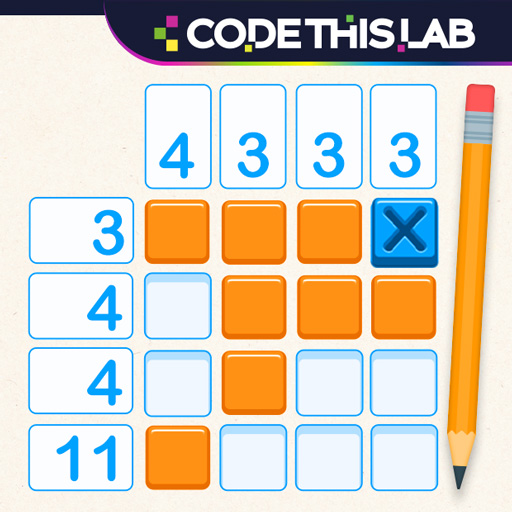
A picture-logic puzzle: use the row and column numbers to shade cells and reveal a hidden image.
More sudoku and logic games
- Sudoku Royal — filed under Sudoku
- Well Sudoku — filed under Sudoku
New in this category
- Sudoku Blocks — also in Logic Games
Controls
Tap or click a cell to fill it; work from the number clues along each row and column.
How to Play
Classic Nonogram, also known as picross, is a grid puzzle where the numbers beside each row and above each column tell you how the cells should be filled. Each clue lists the lengths of the shaded blocks in that line, in order, with at least one empty cell between separate blocks. Read the clues, work out which cells must be painted and which must stay blank, and a picture gradually emerges.
This is not sudoku, so the approach is different: instead of placing symbols without repeats, you deduce filled and empty cells from the numeric clues. Start with the largest clues, which leave the least room to move, and cross-reference rows against columns as the image takes shape. Mind your lives, as there are only three.
Tips & Tricks
- Begin with rows or columns whose clues nearly fill the line, since those cells are forced.
- Mark cells you know are empty as well as filled ones; ruling out is half the puzzle.
- With only three lives, deduce rather than guess, and confirm each block against its crossing line.
Frequently Asked Questions
Is a nonogram the same as sudoku?
No. A nonogram is a picture-logic puzzle solved from row and column number clues to shade cells and reveal an image, rather than placing digits with no repeats.
What do the numbers along the edges mean?
Each number is the length of a run of filled cells in that row or column, listed in order. Separate runs are divided by at least one empty cell.
What happens if I fill a wrong cell?
Mistakes cost you one of your three lives, so it pays to shade a cell only once the clues make it certain.